Growth hormone & sleep
Ipamorelin
People use ipamorelin to boost their own growth hormone for deeper sleep, recovery, and body composition; human research includes IV studies in healthy men and hospital patients.
One-time step
Research use only
Scroll through the five parts below. The tick box and button are at the end. Your Ipamorelin dose then opens right here. Once only, here and on the Lifebuff site.
Quick guide
Your dose
200 mcg
4units
Draw to the 4 line on a 0.3 mL U-100 insulin syringe with half-unit marks.
Range 100–300 mcg · 2–6 units
Mixed for you
Your 10 mg vial comes mixed with 2 mL bacteriostatic water. Each unit is 50 mcg.
-
How often
Twice a day
5 days on, 2 days off each week (for example, Monday to Friday)
-
When
Morning on an empty stomach, and evening 30-60 minutes before bed
-
Where
Belly or thigh
Under the skin
-
Storage
In the fridge (2-8 °C)
-
Cycle
12 weeks on · 4 weeks off
Full course: 3 vials
- Status
- Not FDA-approved. The FDA lists it as a compounding ingredient that may pose significant safety risks. Banned at all times in tested sports (WADA).567
- Evidence
- Animal studies plus a few human IV studies, only one with published placebo-controlled results; no human study of the under-the-skin use people buy it for
Week by weekWhat to expect
- Week 1-2: Users say deeper sleep often comes first
- Week 2-4: A growth blood marker may rise; some test it at weeks 4-6
- Week 4-8: Users say body changes, if any, show at 4-8 weeks
- Week 8-12: Users report slow, steady change; course ends week 12
- Side effects: Allergy signs: call 911 now; stop before surgery; see Side effects
More on each stage
- Week 1-2
- No human study has measured this. Community users say deeper, better sleep is often the first thing they notice, within the first 1-2 weeks.
- Week 2-4
- Community sources say IGF-1, a blood marker that rises when growth hormone is working, may go up within 2-4 weeks. Some suggest an IGF-1 blood test at 4-6 weeks to check that it is doing something.
- Week 4-8
- Community users say body changes, if any, usually show at 4-8 weeks.
- Week 8-12
- Community users report slow, steady body changes over 2-4 months, with bigger changes at 3-6 months. The store course ends after week 12; then take 4 weeks off before another round.
- Side effects
- Most often redness where you inject or trouble sleeping. Some users report headaches or more hunger. Stop and get help for extreme thirst, muscle weakness, severe belly pain, or any sign of an allergic reaction.
Based on what people report in the community sources below. Results vary, and many responses are anecdotal.
Why people use itBenefits and research
-
Raises your own growth hormone
Human studyIn healthy men given ipamorelin by IV drip, growth hormone rose in one short pulse that peaked at about 40 minutes and faded to very low levels by 6 hours. It acts on your body's own supply rather than adding growth hormone.15
-
Cleaner than older peptides like it
Animal/lab studyIn pigs, ipamorelin raised growth hormone without raising the stress hormones ACTH and cortisol, even at doses over 200 times the effective dose. Older peptides in its class (GHRP-2, GHRP-6) raised both. It did not change prolactin, thyroid, or sex-hormone signals.2
-
Bone growth and strength
Animal/lab studyRats given ipamorelin grew bone faster and gained more bone mineral. In rats on steroid medicine, it protected muscle strength and kept bone formation from falling.8910
-
Deeper sleep
Community reportBetter sleep is the most common thing users report, often within 1-2 weeks. No study has tested ipamorelin for sleep.18
-
Recovery and body composition
Community reportUsers report better workout recovery and slow lean-mass and fat changes over 2-4 months. No human study has measured this.18
What it has been studied for
- Slow gut after bowel surgery (IV, 117 hospital patients, placebo-controlled). Two people on ipamorelin died after their surgery join leaked; the FDA says it is unclear if ipamorelin caused this.35Clinical trial
- Gut recovery after bowel surgery, a second, larger IV trial (320 people, run by Helsinn): completed in May 2014, but no results are posted on ClinicalTrials.gov4Clinical trial
- How the body handles ipamorelin and how much growth hormone it releases (IV, healthy men)1Human study
- Bone growth, bone mineral, and protecting muscle and bone from steroid medicine8910Animal/lab study
- Faster stomach emptying after surgery12Animal/lab study
In the bodyHow it works
Ipamorelin is a lab-made chain of 5 building blocks (amino acids). It copies ghrelin, the body's hunger hormone. It flips on ghrelin's switch in the brain and the pituitary gland, which then releases a short burst of your own growth hormone. Growth hormone then raises IGF-1, a messenger that carries many of its effects to muscle, bone, and fat. Unlike older peptides of its kind, it barely touched stress hormones in animal studies.
Flips on ghrelin switches in the hypothalamus, the brain area that tells the pituitary gland when to release growth hormone (lab study).
Sets off one short burst of growth hormone. In healthy men given a dose into a vein, it peaked about 40 minutes later and faded by 6 hours (human study).
Ghrelin switches in the gut help the stomach empty faster. Ipamorelin got the gut moving faster in rats after surgery (animal study).
Made bones grow more and hold more mineral in rats (animal study).
Helped rats on steroid medicine keep their muscle strength (animal study).
Peak, half-life, clearancePharmacokinetics
- Peak
- Not established for under-the-skin shots in humans. After a 15-minute IV drip in healthy men, the growth-hormone pulse peaked at about 40 minutes (0.67 hours).
- Half-life
- About 2 hours in healthy men after an IV drip. It has not been measured for under-the-skin shots. In rats given an IV dose it was about 27 minutes.
- Cleared
- Not measured directly in humans. Using the 2-hour IV half-life, about 97% would be gone in roughly 10 hours (five half-lives; an estimate). The growth-hormone pulse itself was back to very low levels by 6 hours. In rats, 60-80% left the body unchanged, mainly in urine.
Half-life is how long it takes the body to remove half of a dose.15
Research and communityDosing guidance
Lower
100 mcg
2 units
Typical
200 mcg
4 units
Higher
300 mcg
6 units
Twice a day. Morning on an empty stomach, and evening 30-60 minutes before bed. 5 days on, 2 days off each week (for example, Monday to Friday). Units are for a 10 mg vial mixed with 2 mL water (5 mg per mL).
What the community uses
Community reportLower end · classic CJC saturation combo
100-200 mcg each, combined with CJC-1295 No DAC
The classic 'saturation dose' combo biohackers inject 2-3 times daily (fasted AM, post-workout, pre-bed) for growth-hormone pulses.18
Most common · standard sleep + recovery dose
200-300 mcg, 1-2 times daily
The standard community dose for sleep and recovery, injected fasted — most stack it with CJC-1295 No DAC rather than running it solo.18
Higher end · body-recomp frequency
200-300 mcg, 2-3 times daily
Higher-frequency 'body recomposition' protocol reported by those chasing body-composition change, with strict fasting windows around each injection.18
Standard sleep and recovery protocol (not tested in trials)
200-300 mcg under the skin, 1-2 times a day, on an empty stomach and often before bed, for 8-12 weeks, 5 days on and 2 days off. The store protocol (200 mcg twice a day) sits in this range.18
With CJC-1295 No DAC
100-200 mcg of each peptide, injected together 2-3 times a day, for 8-16 weeks.18
Body recomposition
200-300 mcg, 2-3 times a day (fasted morning, after workouts, before bed), for 12-16 weeks with strict fasting windows.18
Research protocols
Human pharmacokinetic study (healthy men, hospital research unit)
One 15-minute IV drip of 4.21 to 140.45 nmol per kg of body weight, which is about 3 to 100 mcg per kg.15
Human surgery trial (hospital patients after bowel surgery)
0.03 mg per kg by IV drip twice a day for up to 7 days. For a 70 kg adult that is about 2.1 mg per dose, roughly 10 times the store dose, given into a vein instead of under the skin.3
Rat bone growth study
18, 90, or 450 mcg a day, split into three under-the-skin shots, for 15 days.8
Rat steroid-protection study
100 mcg per kg under the skin three times a day for 3 months.10
Mouse body-fat study
Bodybuilding forums, as summarized in a 2026 medical review
200-300 mcg under the skin 2-3 times a day, often with CJC-1295 No DAC; cycles of 8-12 weeks on, then 4-6 weeks off. The review stresses these are user reports, not tested or safe doses.14
Ipamorelin is not FDA-approved. Community dosing and the CJC-1295 combination have not been validated in controlled trials, and most users stack it with other peptides, making attribution difficult.
Dosing guidance built from the cited research and community reports. It is not a prescription.
On and offCycling
- 1
- 2
- 3
- 4
- 5
- 6
- 7
- 8
- 9
- 10
- 11
- 12
- 13
- 14
- 15
- 16
On: 12 weeks Break: 4 weeks
A full course at the store pace takes 3 vials. A mixed vial keeps for up to 90 days.
Why the break helps
No study has tested whether breaks help with ipamorelin. The break is a community habit with two reasons behind it. First, the pituitary (the gland that makes growth hormone) may respond less over time: in rats, its response to a test dose was slightly lower after 15 days of ipamorelin. Second, there is no long-term human safety data, so a break limits nonstop use. Community cycles are usually 8-12 weeks on and 4-6 weeks off.
What to watch forSide effects
Common
Redness, itching, or a small bump where you injected
What to do Rotate sites and use a fresh syringe every time. If redness spreads or gets hot and painful, treat it as an infection (see below).
More hunger. Ipamorelin copies the hunger hormone ghrelin, and mice on it ate more, though community users say it changes appetite only a little.
What to do Inject on an empty stomach and plan your meals. If unwanted weight gain starts, drop to 100 mcg (2 units) or stop.
Trouble sleeping (10.7% on ipamorelin vs 5.2% on placebo in a hospital IV trial)
What to do Move the evening shot earlier. If it keeps happening, skip the evening shot.
Puffy hands or feet, tingling, or joint and muscle aches (known effects of raising growth hormone), or headache (reported by some users)
What to do Drop to 100 mcg (2 units). If it lasts more than a few days, stop and talk to a doctor.
Stop and get help
Deaths in the only placebo-controlled trial with published results: two people on ipamorelin died after the join in their bowel leaked following colon-cancer surgery. The FDA says it is unclear whether ipamorelin caused these deaths, but counts them, with the higher rates of low potassium and high blood sugar, as a safety concern.
What to do Stop ipamorelin before any planned surgery and tell your surgeon and doctors that you use it. Do not use it while recovering from surgery.
High blood sugar: strong thirst, peeing a lot, or unusual tiredness. Blood sugar was high at hospital discharge in 14.3% of people on ipamorelin vs 8.6% on placebo in the hospital trial, and the FDA warns that raising growth hormone can cause diabetes.
What to do Stop ipamorelin and get your blood sugar checked by a doctor soon.
Low potassium: muscle weakness or cramps, or a racing or skipping heartbeat. It was more common on ipamorelin (12.5%) than placebo (3.4%) in the hospital trial.
What to do Stop ipamorelin and see a doctor the same day. Call 911 for chest pain or fainting.
Allergic reaction: hives, swelling of the face, lips, or throat, trouble breathing, or feeling faint. The FDA warns injected peptides like ipamorelin may trigger the immune system.
What to do Stop ipamorelin and call 911 (or your local emergency number) right away.
Severe belly pain that will not go away, often spreading to the back, with nausea or vomiting. This can be pancreatitis, a warning on growth-hormone labels that the FDA says may also apply to ipamorelin.
What to do Stop ipamorelin and get urgent medical care.
Severe headache with blurred or double vision, or sudden shortness of breath with fast swelling
What to do Stop ipamorelin and get urgent medical care.
Infection at the injection site: redness that spreads, heat, pus, red streaks, or fever
What to do Stop injecting and see a doctor the same day.
Do not use if
- You are pregnant, trying to get pregnant, or breastfeeding: there is no safety data, and in mice, drugs acting on the same receptor harmed fertility and pregnancy.
- You have cancer now or had it recently: the FDA warns that raising growth hormone and IGF-1 may raise cancer risk.
- You have diabetes or prediabetes, unless your doctor agrees and checks your blood sugar.
- You have surgery planned or are recovering from surgery: two people on ipamorelin died after bowel-surgery complications in the hospital trial, and the FDA calls this a safety concern even though the cause is unclear.
- You are under 18.
- You compete in a drug-tested sport: WADA bans ipamorelin at all times, in and out of competition.
Sites and techniqueInjecting
Under the skin (subcutaneous)
- Belly, 2 inches from the navel
- Front of the thigh
Move each shot at least 1 inch (2-3 cm) from the last one and switch sides. Belly shots should stay about 2 inches (5 cm) away from the belly button.
Storage
- Keep it
- Keep the mixed vial in the fridge (2-8 °C), away from light and heat. Never leave it in a hot car.
- How long
- Use within 90 days of mixing. A mixed vial kept in the fridge holds its strength for 60-90 days, then slowly starts to lose potency. Wipe the rubber top with an alcohol swab before every draw.
Drawing your dose
Stop when the top edge of the black stopper reaches the 4 line.
Syringe: a 0.3 mL (30-unit) U-100 insulin syringe with half-unit marks, so small doses are easy to read.
- Each unit line on a U-100 insulin syringe holds 50 mcg. Draw to the 4-unit line for 200 mcg, 2 units for 100 mcg, or 6 units for 300 mcg.
- Before every draw, hold the syringe at eye level, flick out air bubbles, and push the plunger back to the exact line.
- Inject on an empty stomach. Community users wait about 2 hours after eating and hold off food for 30-60 minutes after the shot, because food, especially sugar, can blunt the growth-hormone pulse.
- Pinch a fold of skin, insert the needle at 45 to 90 degrees, push slowly, and wait a few seconds before pulling out.
- If the evening shot keeps you awake, move it earlier in the evening. Trouble sleeping was more common on ipamorelin than placebo in a hospital trial.
- Use a new sterile syringe every time and never share one.
Stacks and interactionsPairs well with
-
CJC-1295 No DAC copies GHRH, the brain's other growth-hormone signal, and works on a different receptor from ipamorelin. In human studies, a GHRH-type signal plus a ghrelin-type peptide (GHRP-2) released more growth hormone together than either alone. This is the most popular community pair and the store's blend; no trial has tested this exact pair.1318
-
Tesamorelin is a GHRH copy that cut deep belly fat by about 11% in 6 months in a large placebo-controlled trial of people with HIV. Like CJC-1295, it works on a different receptor from ipamorelin, and the two are both in the store's Lean Machine stack. They have not been tested together, and both raise growth hormone, so watch your blood sugar.1513
-
DSIP is studied for sleep; ipamorelin users report deeper sleep. They are paired in the store's Deep Sleep stack. The pair has not been tested together.1618
-
BPC-157 sped tendon healing in rats, while ipamorelin is used for recovery. Community users commonly add BPC-157 to ipamorelin and CJC-1295 for injury repair. This is a community habit; the pair has not been tested together.1718
Interactions
Diabetes medicines (insulin, metformin, GLP-1 drugs)
Ipamorelin raised blood sugar more often than placebo in the hospital trial, and the FDA warns growth-hormone boosters can worsen blood sugar control.
What to do Ask your doctor first and check your blood sugar more often.
Other growth-hormone boosters (growth hormone shots, MK-677, sermorelin, tesamorelin, CJC-1295)
Effects add up: more growth hormone and IGF-1 can mean more fluid retention, aches, and blood-sugar problems.
What to do Do not add more than one other booster at a time, and watch for swelling, tingling, or thirst.
Water pills (diuretics) or other medicines that lower potassium
Low potassium was more common on ipamorelin in the hospital trial, so the two could add up.
What to do Ask your doctor first. Report muscle weakness, cramps, or a skipping heartbeat.
Medicines that affect heart rhythm (some antibiotics, antidepressants, and heart drugs that prolong the QT interval)
An approved drug that works the same way (macimorelin) can disturb heart rhythm. Whether ipamorelin does is unknown.
What to do Ask your doctor or pharmacist first.
Thyroid or cortisol replacement medicine
Raising growth hormone can uncover or worsen low thyroid or low cortisol, so your dose needs may change.
What to do Tell the doctor who manages these medicines before you start.
Videos and sourcesKey references
Videos
-
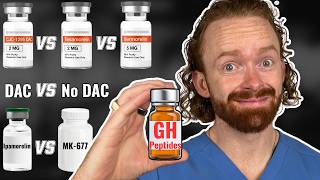 CJC-1295, Ipamorelin, Tesamorelin & Sermorelin: Deep Dive on the Best GH Peptides
-
 Dr. Explains Why CJC/IPA is KING of Growth Hormone Peptides
-
 Dr Reviews Ipamorelin - Risks vs Reality
Sources
- 1Gobburu et al., Pharm Res 1999 (pharmacokinetics in healthy men, IV)Study
- 2Raun et al., Eur J Endocrinol 1998 (first selective growth-hormone secretagogue; rats and pigs)Study
- 3Beck et al., Int J Colorectal Dis 2014 (phase 2 trial after bowel surgery, 117 patients)Clinical trial
- 4ClinicalTrials.gov NCT01280344 (second phase 2 IV trial, 320 people, completed 2014, no results posted)Clinical trial
- 5FDA briefing document, Pharmacy Compounding Advisory Committee, Oct 29 2024 (ipamorelin review)Reference
- 6FDA: Certain bulk drug substances for compounding that may present significant safety risks (ipamorelin acetate)Reference
- 7WADA 2026 Prohibited List, class S2 (names ipamorelin)Reference
- 8Johansen et al., Growth Horm IGF Res 1999 (bone growth in rats)Study
- 9Svensson et al., J Endocrinol 2000 (bone mineral in rats)Study
- 10Andersen et al., Growth Horm IGF Res 2001 (muscle and bone in steroid-treated rats)Study
- 11Lall et al., Biochem Biophys Res Commun 2001 (body fat in mice)Study
- 12Greenwood-Van Meerveld et al., J Exp Pharmacol 2012 (stomach emptying in rats after surgery)Study
- 13Sinha et al., Transl Androl Urol 2020 (growth-hormone secretagogue review)Review
- 14Dominikowski et al., Front Endocrinol 2026 (review of GH-axis peptides and user protocols)Review
- 15Falutz et al., J Acquir Immune Defic Syndr 2010 (tesamorelin belly-fat trial)Clinical trial
- 16Bes et al., Neuropsychobiology 1992 (DSIP insomnia trial)Clinical trial
- 17Staresinic et al., J Orthop Res 2003 (BPC-157, rat Achilles tendon)Study
- 18Peptide Protocol Wiki: Ipamorelin community protocols (200 reports)Community
- 19Peptide Protocol Wiki: Ipamorelin overview (timing, IGF-1 timeline)Community
- 20Peptide Protocol Wiki: Ipamorelin side effectsCommunity
Where people discuss it
The FDA and Big PharmaWhat “not FDA-approved” really means
Some peptides, like semaglutide (Ozempic and Wegovy), are FDA-approved medicines. Most of the peptides people research are not. That label sounds like the FDA tested something and turned it down. Usually it means something else: nobody has paid for the studies the FDA needs to see. Here is why.
The FDA doesn’t test drugs. Companies do.
The FDA does not run its own drug tests. A company that wants to sell a new medicine has to test it first, and pay for it. It studies the drug in animals, then in people: first 20 to 100 volunteers, then a few hundred, then up to 3,000. Then it sends all the results to the FDA. FDA scientists review them and decide whether the benefits outweigh the risks.
So approval always starts with a company asking for it. If no company applies, the FDA has nothing to review, however promising the research looks.
Those studies cost about a billion dollars
A study in the medical journal JAMA estimated that bringing one new drug to market costs a typical company about $1.1 billion. That figure includes the money spent on drug ideas that failed along the way, because many drugs that start human testing never make it.
A patent is how a company earns that money back
A patent is a right the government gives an inventor. For up to 20 years from the day the inventor applies, nobody else may make or sell the invention without permission.
For a drug company, that right is what makes the billion-dollar bet worth it. While the patent lasts, the company is the only seller, so it can charge enough to pay back the studies and the failures. When the patent runs out, other companies can sell cheap copies, called generics, and the price drops.
The FDA adds a shorter shield of its own. For 5 years after a brand-new drug is approved, no copycat version can apply for approval. That helps, but it is much shorter than a patent can last.
Why most peptides can’t be patented
To get a patent, an invention has to be new, and it has to be something people made, not something found in nature. Most popular peptides fail one test or both.
They come from nature. Many are copies or small pieces of molecules your body already makes. KPV is a 3-building-block piece of the hormone that tans your skin. BPC-157 is copied from a protein in stomach juice. In 2013 the US Supreme Court ruled that something that exists in nature, like a human gene, cannot be patented just because someone found it and pulled it out.
They aren’t new anymore. Many were first described in research papers decades ago. Scientists were already testing KPV in the 1980s. Once something has been published, it no longer counts as new, so nobody can patent it now, and any patents from back then have long since run out.
Without a patent, a company that paid for the studies would soon face rivals selling the same peptide without having paid for any research. Few companies will spend a billion dollars on a product anyone can copy. So nobody goes first, and the large human studies never happen.
The workaround: change the molecule
Drug companies do make peptide medicines, but they change the peptide first. A changed molecule is a new invention, so it can be patented. Semaglutide is a lab-made version of GLP-1, a gut hormone your body releases after meals, changed so one shot lasts a week. Tesamorelin (Egrifta) is the body’s own growth-hormone signal with a small fatty chain added. Both went through the full studies, and both are FDA-approved.
The natural versions, and the many peptides nobody has changed and patented, stay where they are: studied in labs and animals, used by the biohacking community, and never put through large human trials.
What this means for you
When a peptide is “not FDA-approved,” it usually means no company has paid for the large human studies. It does not mean the FDA tested it and found it harmful.
It also does not mean it is proven safe or proven to work. Without those studies, nobody knows the best dose for sure, or what rare or long-term side effects it may have. And the FDA does not check research peptides for purity or strength the way it checks approved medicines. That is why this page labels every finding by the kind of study behind it, and lists who should not use it.
Sources for this section
- 1FDA: How drugs are developed and approved (the FDA does not test drugs; companies submit the evidence)
- 2FDA: The drug development process, step 3: clinical research (study sizes for each phase)
- 3Wouters, McKee & Luyten, JAMA 2020, corrected 2022: median cost to bring a new drug to market, $1.14 billion
- 4US patent law, 35 U.S.C. § 154: a patent lasts 20 years from the filing date
- 5FDA: Frequently asked questions on patents and exclusivity (5-year new chemical entity exclusivity)
- 6US Supreme Court, Association for Molecular Pathology v. Myriad Genetics (2013): naturally occurring genes cannot be patented